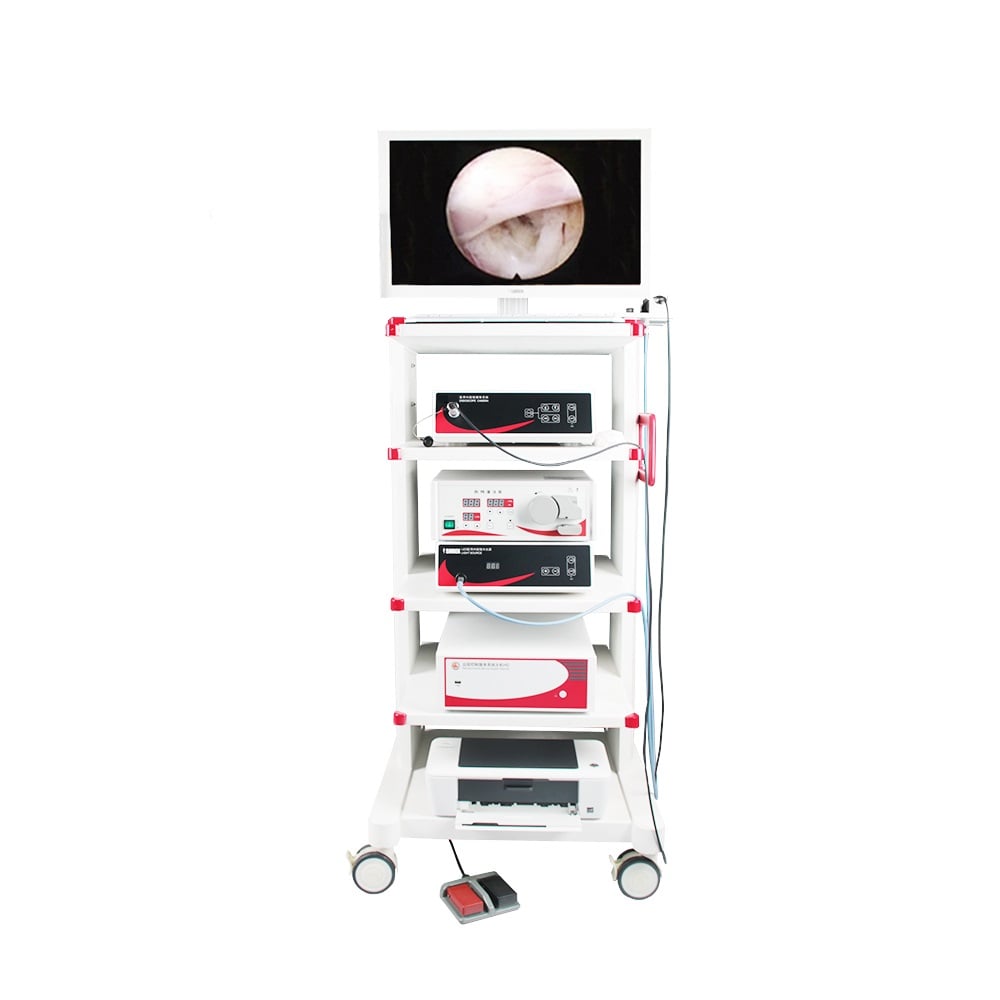
Modern laparoscopic surgery systems bring together multiple key parts that all need to work together for these minimally invasive operations. The basics include those high resolution cameras, the special gas pumps that inflate the belly area, comfortable tools for surgeons to handle, plus various energy devices for cutting and sealing tissues. Getting these different pieces to play nicely together is really important when mixing equipment from different companies. Surgeons need their images to stay clear while operating and the gas pressure inside needs to stay stable throughout the whole procedure, which can get pretty intense at times.
At the heart of modern surgical setups are these imaging systems that bring together 4K quality cameras and those special rod lens laparoscopes. They need bright lights too, something around 100k lux or better for clear viewing. For maintaining good visibility during procedures, surgeons rely on insufflators that can adjust pressure between 5 to 25 mmHg while smoke evacuation systems kick in when needed. The latest instrument towers come equipped with these centralized control panels that gather all the buttons and switches into one place instead of having them spread across multiple boxes. This consolidation really helps speed things up in the operating room and cuts down on the mess of wires and equipment lying around.
The third gen systems tackle those pesky compatibility issues between devices thanks to standard communication protocols such as ORiN, which stands for Open Robot/Resource Interface for the Network. Surgeons can now tweak imaging settings, manage insufflation flow at speeds reaching 35 liters per minute, and adjust energy device parameters all from one handy touchscreen panel. Real world data shows surgical staff experience roughly 23 percent fewer interruptions during procedures when using these newer integrated platforms versus older models. Fewer interruptions means safer operations and better overall efficiency in the operating room, something that makes sense for everyone involved.
The best modern designs really focus on how space gets organized around them. When they mount equipment on booms instead of running cables across floors, some facilities report cutting their cable clutter down to just 20% of what it used to be. The control panels themselves have these touch-sensitive areas that work hand in hand with special computer chips called FPGAs. This setup helps cut down on wait time when surgeons move their hands versus when the machine actually responds. For hospitals looking to replace old equipment, whether instruments fit into both 5mm and 10mm ports matters a lot. Most administrators I've talked to say this compatibility issue is one of the first things they check when shopping for new surgical tools because nobody wants to spend good money only to find their investments obsolete in a few years.
The OR Times Study (JACS 2021) documents a 40% reduction in preoperative setup times when using fully integrated laparoscopic systems versus piecemeal configurations. This gain stems primarily from automated self-test sequences (completed in 2.3 minutes vs. manual 8.7-minute checks) and unified calibration protocols that maintain optical alignment within 0.05mm tolerance.
Laparoscopic surgery today depends heavily on those rigid rod-lens scopes that can still give pretty good visuals even though they're only about 5 mm thick. The actual optical path inside these scopes has all sorts of precisely aligned lenses sending back images from deep inside the body. Most of them work well at lengths between 28 and 42 centimeters which covers most abdominal operations. Surgeons have had problems with fogged lenses for years, but now there are special anti-fog coatings and hydrophobic treatments that keep things clear when temperatures change during surgery. According to Surgical Innovation journal from last year, around one third of all procedures still struggle with this issue despite these advances.
Most laparoscopes on the market today still use rod-lens systems, which account for around 78% of all designs because they transmit light better than those old prism setups. The efficiency rate here ranges between 85 and 92 percent, making them pretty much the gold standard in terms of optical performance. For complicated procedures where doctors need to see angles that straight scopes just can't reach, angled laparoscopes at either 30 or 45 degrees come into play. According to recent clinical studies, using 30 degree scopes actually cuts down on instrument collisions during pelvic operations by about 41%, which makes a real difference in tight spaces. There's also been some interesting developments lately with new hybrid designs combining both prism and rod technologies. These newer models are specifically targeting that annoying edge distortion problem that plagues traditional rod-lens units, typically somewhere between 12 and 15 percent across the image periphery.
CMOS sensors mounted at the distal tip eliminate fiber-optic degradation, achieving 120 dB dynamic range for balanced shadow and bright-tissue visualization. Fourth-generation 4K systems provide 3840×2160 resolution at 60 fps, with studies showing multi-spectral imaging enhances tumor margin identification by 29% in oncological procedures.
Ultra-low latency monitors (8–12 ms delay) synchronize with instrument movement to prevent spatial disorientation. HDR processing expands visible grayscale differentiation by 18× compared to legacy displays, while adaptive noise-reduction algorithms maintain clarity at ISO 2000+ equivalence—critical in dark-field environments such as retroperitoneal dissections.
A 2022 randomized trial (Surgical Endoscopy) comparing 4K vs. HD systems in 420 cholecystectomies demonstrated a 27% improvement in critical view identification (p<0.001) and a 19% reduction in accidental capsule breaches during hepatic mobilization. Surgeons reported 31% faster decision-making, aided by enhanced nerve fiber visualization in Calot's triangle.
Modern systems deliver 150,000–200,000 lux of shadow-free illumination via fiber-optic cables paired with high-intensity sources, enabling precise color rendering (CRI >90) crucial for tissue differentiation. An industry analysis found integrated cooling systems reduce thermal drift by 60% compared to legacy models, improving stability during prolonged procedures.
Xenon lights do have that edge in brightness, about 15% more actually when we compare 85 watts against 70 watts from LEDs. But let's talk longevity here - LEDs can go on for anywhere between 18,000 to 30,000 hours while those xenon bulbs typically burn out after just 500 to 1,000 hours max. Temperature is another big difference too. The surface temps on LEDs stay comfortably under 40 degrees Celsius, whereas xenons run hot at around 65 to 70 degrees. That makes all the difference when following proper thermal management protocols to keep both patients safe and instruments functioning properly during procedures. And according to recent studies published in JSLS back in 2023, surgical staff working with LED lighting systems saw roughly 42 percent fewer instances where they had to replace instruments during operations. Makes sense really since cooler running equipment tends to be gentler on delicate medical tools over time.
Single-strand fiber systems lose 12–18% luminosity per meter, whereas liquid-filled cables maintain 95% transmission efficiency. Microscopic cracks under 50μm can reduce light output by 30%, making regular inspection essential. Reprocessing issues account for 23% of laparoscopic system maintenance costs (AORN 2022).
Third-generation insufflators maintain intra-abdominal pressure within ±1 mmHg of setpoints (typically 8–15 mmHg) through real-time feedback loops. Integrated gas warmers reduce postoperative adhesions by 35% compared to cold CO₂ delivery (Surg Innov 2023), improving patient outcomes.
Adaptive flow systems adjust from 0.5 L/min (diagnostic) to 45 L/min (emergency decompression). Smart sensors detect peritoneal compliance changes within 0.2 seconds, preventing over-insufflation. Clinical protocols recommend limiting continuous use above 12 mmHg to 90 minutes (SAGES 2021) to mitigate cardiopulmonary risks.
Hybrid systems combining smoke filtration (capturing 0.1μm particles) with insufflation reduce airborne contaminants by 82% (JAMASurg 2023). Emerging evidence supports low-pressure pneumoperitoneum (6–8 mmHg) combined with abdominal wall lifters to maintain operative space while reducing physiological stress, especially in obese patients.
 Hot News
 EN
EN