 EN


How to Evaluate Medical Sterilizer Quality and Safety Features
Choosing a medical sterilizer is not simply a matter of comparing chamber volume, cycle names, or the quoted price. For a hospital procurement team, the useful question is whether a sterilizer can support the intended instruments, the actual workload, and the evidence trail required by the facility. That means putting the reprocessing team, biomedical engineering, infection prevention, and purchasing in the same review—not treating the purchase as an isolated equipment decision.
A practical evaluation begins with the device instructions for use and the facility’s own policies. A cycle that looks appropriate on a specification sheet may not be validated for every load, packaging system, lumen, accessory, or material in your department. The checklist below helps turn a broad sterilizer comparison into questions your team can document and verify.
Start with the instruments and the required microbicidal process
Before comparing models, build a load map. List the reusable instruments and accessories that will enter the workflow, their materials, their packaging, the presence of lumens or complex geometries, and the manufacturer-validated reprocessing requirements. This is also where teams should distinguish sterilization from medical device disinfection. They are not interchangeable terms: the appropriate process depends on intended use, device design, and the manufacturer’s instructions.
Ask vendors to show which cycle families the proposed sterilizer supports and how those cycles align with the relevant device instructions. Do not accept a generic statement that a unit handles “all instruments.” Instead, identify the loads your facility expects to process and confirm the compatible cycle, accessories, packaging, and documentation for each one. Where compatibility is not established, record it as an open validation item rather than assuming a later configuration will solve the problem.
Evaluate safety as a system, not as a single feature
A safe sterilizer contributes to a controlled process from loading through release of the processed items. Review the following controls in the context of your local procedures:
- Cycle access and interlocks: Confirm how the unit prevents unsafe opening, inappropriate cycle selection, or interruption during operation.
- Parameter visibility: Determine how operators review time, temperature, pressure, or other cycle parameters applicable to the technology before releasing a load.
- Alarm handling: Ask what the operator sees when a cycle fails, is aborted, or reaches an out-of-range condition, and how the event is retained for follow-up.
- Load traceability: Check whether records can connect a cycle, load number, operator, indicators, and processed items in the way your quality system requires.
- Utilities and room conditions: Verify electrical supply, water quality, drainage, ventilation, clearances, floor loading, and any technology-specific safety needs before purchase.
These items matter because a display alone is not a complete assurance system. CDC guidance describes routine monitoring with mechanical, chemical, and biological indicators, each contributing different evidence about the process. Your facility should determine the exact monitoring and release practices with its infection-prevention leadership, local rules, and the applicable instructions for use.
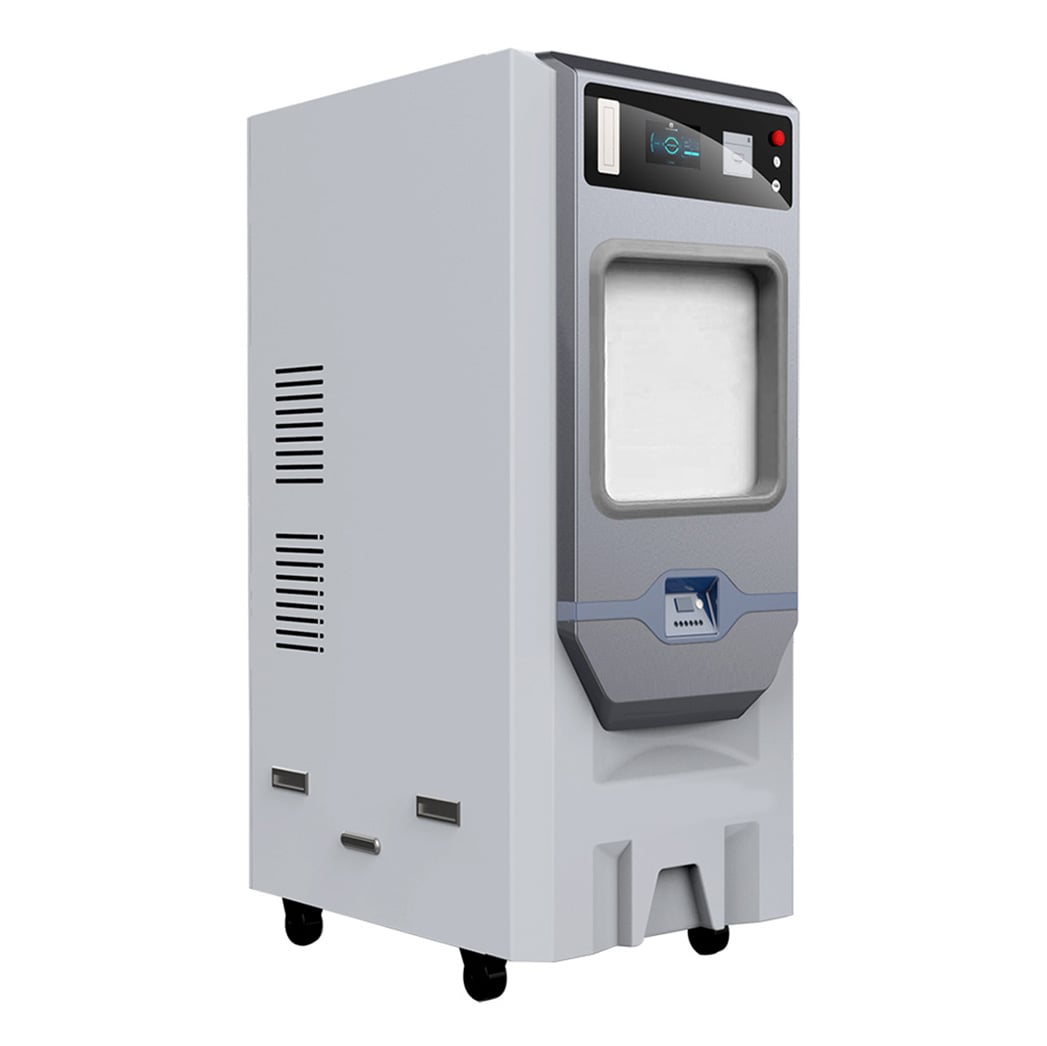 Process evidence should be reviewed alongside equipment features.
Match sterilizer capacity to the hospital sterilization workflow
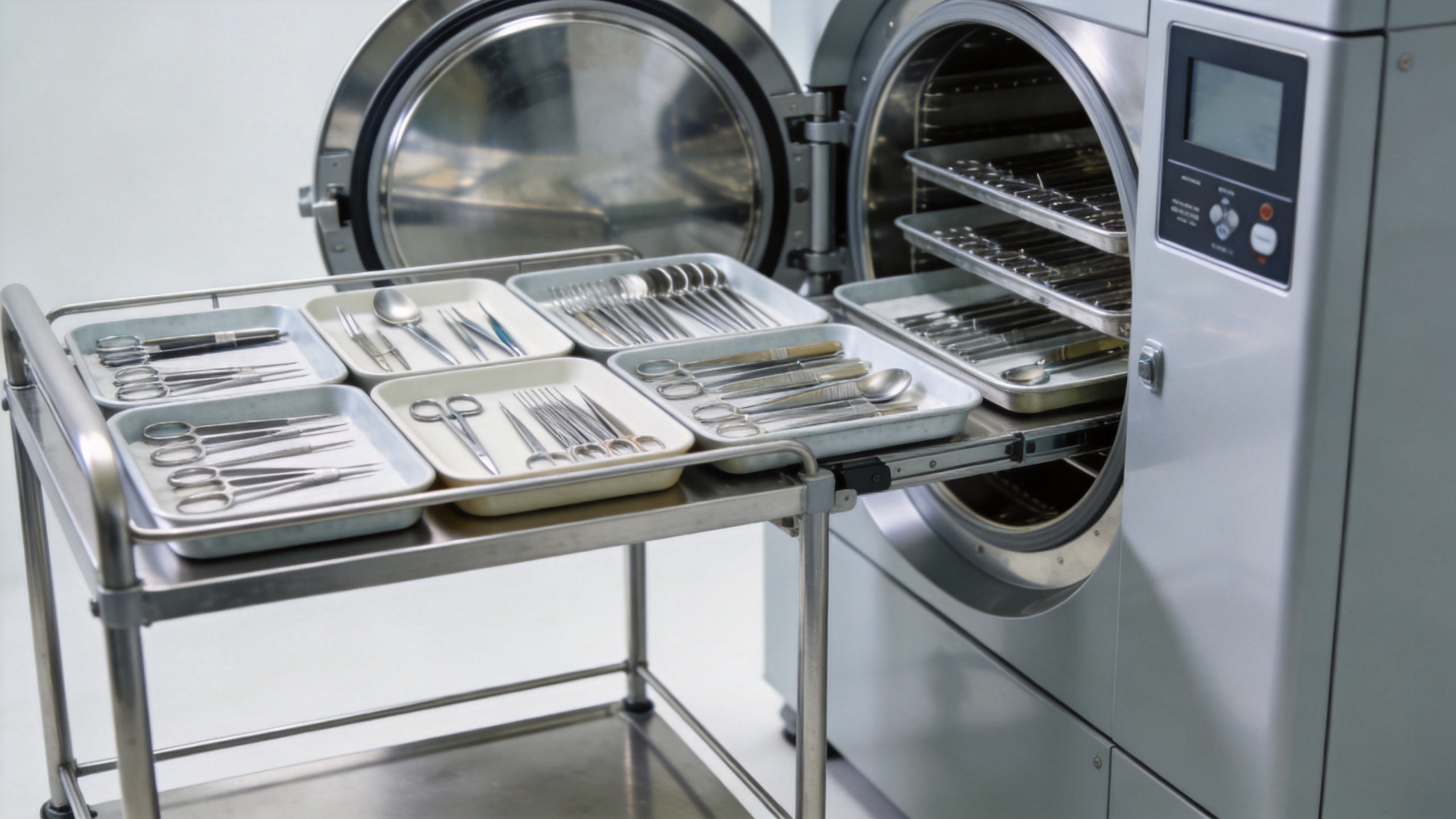
Sterilizer capacity should be evaluated as usable throughput, not just chamber dimensions. A larger chamber can be valuable, but it does not automatically remove a bottleneck if loading, cooling, documentation, transport, or release checks still constrain the department. Map a typical day: expected loads by shift, peak periods, instrument turnaround needs, urgent-load policy, staffing, staging space, and what happens if one unit is unavailable.
Then test the proposed sterilizer against realistic load configurations rather than an empty-chamber volume claim. Ask which tray, rack, container, and packaging combinations are validated; how those arrangements affect the cycle; and how drying or cooling time affects the handoff. This exercise is particularly useful when a hospital sterilization workflow serves multiple departments with different instruments and demand patterns.
| Evaluation question | Evidence to request | Why it matters |
|---|---|---|
| What is the usable load for our trays and packs? | Validated loading guidance and configuration documentation | Nominal chamber size may not reflect practical throughput. |
| What happens during peak demand? | Cycle, handling, cooling, and release workflow review | Turnaround depends on the whole process, not the cycle alone. |
| How are failed or interrupted cycles handled? | Alarm logic, records, and local escalation procedure | Clear recovery steps reduce ambiguous load disposition. |
Check the evidence behind monitoring and validation
Quality claims should be converted into evidence requests. For each proposed sterilizer, ask for the operating documentation, installation requirements, preventive-maintenance schedule, training plan, service response process, and records available to the user. When the unit is installed, relocated, repaired, or has a significant process event, your facility’s validation and monitoring approach should reflect applicable requirements and policies.
FDA guidance on reusable-device reprocessing emphasizes that the recommended microbicidal process and parameters should be validated, technically feasible, and compatible with the device and available equipment. In practice, this means a buyer should check the relationship among the instrument instructions, the sterilizer cycle, the sterilization accessories, and the department’s documented workflow. It is a verification task, not a marketing comparison.
Make sterilizer maintenance part of the selection decision
Strong sterilizer maintenance planning begins before delivery. Clarify who performs routine checks, who is authorized for preventive service, what consumables are required, how water treatment or utilities affect performance, and how service records will be retained. Ask for the tasks expected from operators versus biomedical engineering or a qualified service provider. If the vendor cannot explain the maintenance boundary clearly, the team may struggle to sustain the equipment after commissioning.
Also review downtime planning. A resilient department considers access to service, availability of parts, operator retraining, backup capacity, and escalation after an abnormal cycle. The right sterilizer is therefore one the organization can monitor, maintain, and recover around—not merely one with an attractive initial feature list.
Use an acceptance checklist before final sign-off
- Confirm the instrument and accessory scope against manufacturer-validated reprocessing instructions.
- Verify installation conditions, utilities, safety clearances, and training responsibilities.
- Review representative loads in the intended hospital sterilization workflow.
- Define mechanical, chemical, and biological monitoring expectations with the appropriate clinical and quality stakeholders.
- Document preventive maintenance, service contacts, recordkeeping, and response to a failed cycle.
- Set acceptance criteria that are specific enough to verify before routine use.
Final perspective
A sound medical sterilizer decision is evidence-led. Compare technology and capacity, but give equal attention to compatible loads, monitoring, safe operation, records, site readiness, and long-term support. When those questions are answered together, a purchasing team is better positioned to select a sterilizer that fits its clinical responsibilities and its day-to-day workflow.
 Hot News

